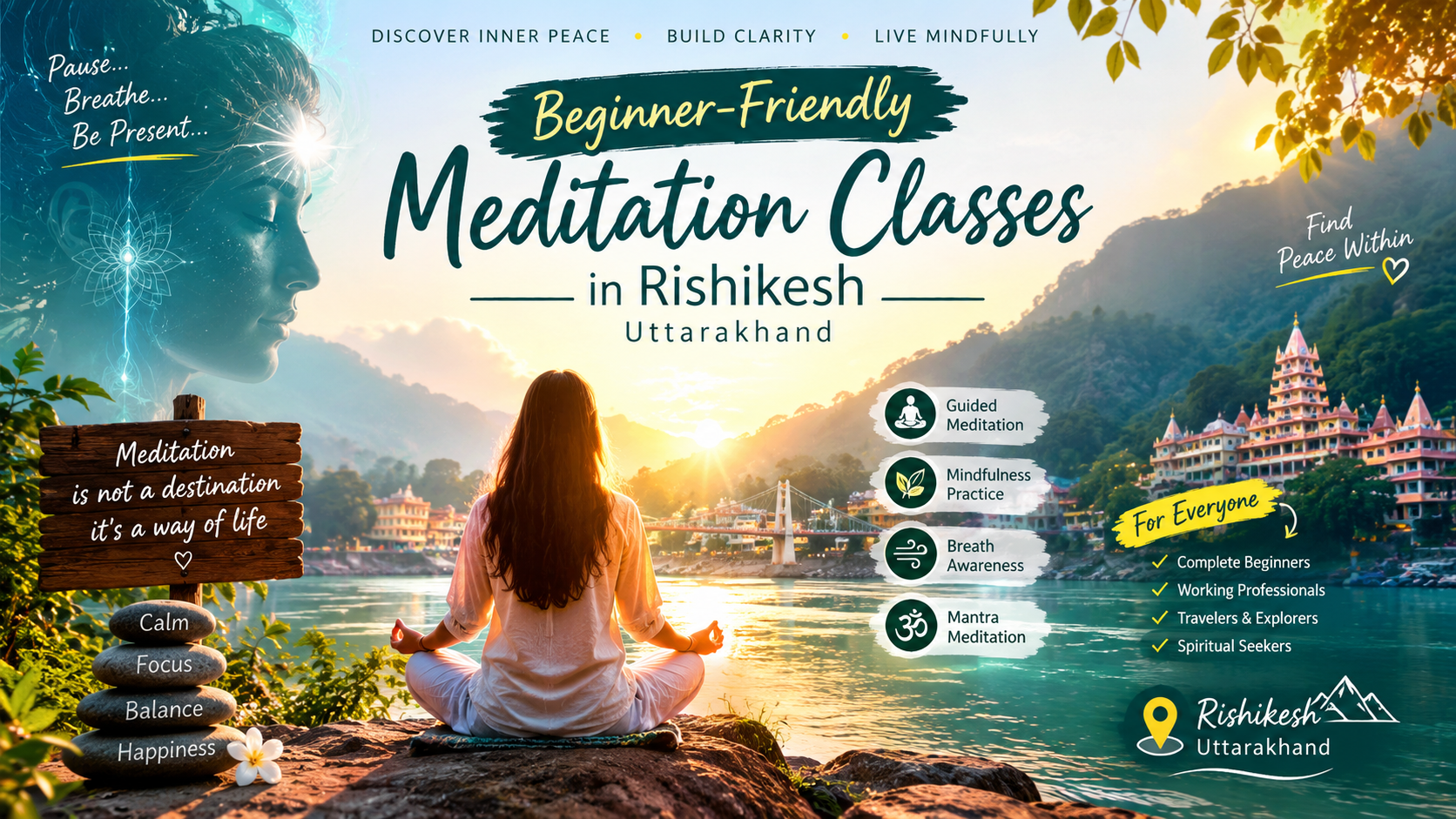
Meditation Classes in Rishikesh: Discover Inner Peace, Clarity & Balance
Introduction: Find Your Inner Peace in the Spiritual Heart of Rishikesh
What if the peace you are searching for outside could begin with a few moments of stillness within?
In a world filled with constant notifications, busy schedules, and endless thoughts, finding time for yourself has become more important than ever. Meditation offers an opportunity to pause, observe your thoughts, reconnect with your breath, and develop a deeper understanding of your inner world.
If you are searching for meditation classes in Rishikesh, you are choosing a destination renowned for its spiritual traditions, yoga culture, and connection with the sacred River Ganga. Surrounded by Himalayan landscapes and a rich spiritual heritage, Rishikesh attracts people who want to explore meditation, mindfulness, and personal growth.
Whether you are a complete beginner, a working professional looking for a calmer routine, or a spiritual seeker exploring traditional meditation, joining a suitable meditation class in Rishikesh can help you establish a consistent practice.
The journey does not begin with controlling every thought. It begins with learning to observe your mind without judgment.
Why Choose Meditation Classes in Rishikesh?
Rishikesh offers an environment where meditation is connected with traditional Indian philosophy, yoga, and everyday spiritual practices. The official Uttarakhand Tourism website also highlights the city’s significance as a destination for yoga and meditation.
Here are some reasons to consider learning meditation in Rishikesh.
1. Experience a Spiritually Rich Environment
From the peaceful surroundings of the Himalayan foothills to the devotional atmosphere around the Ganga, Rishikesh provides many opportunities to step away from the distractions of daily life.
The environment can inspire you to slow down, spend more time in reflection, and develop a regular meditation routine.
2. Learn Meditation with Proper Guidance
Starting meditation alone can sometimes feel confusing. You might wonder whether to focus on your breath, repeat a mantra, or simply observe your thoughts.
A guided meditation class can introduce these practices step by step. A qualified and experienced instructor can explain the technique, help you maintain a comfortable posture, and answer questions as you learn.
3. Build a Consistent Daily Practice
Meditation is not about having a perfect experience during every session. Consistency matters more than trying to achieve a particular feeling.
Regular classes can provide structure and encourage you to continue practising even when your mind feels busy or distracted.
4. Take a Break from Your Daily Routine
A meditation session creates dedicated time to pause and pay attention to your present experience. Many people explore meditation to support relaxation, self-awareness, and emotional balance.
Research on meditation suggests potential benefits for some aspects of well-being, although results vary by person and practice. For further information, explore the National Center for Complementary and Integrative Health’s guide to meditation and mindfulness.
Types of Meditation Classes in Rishikesh
Different meditation techniques offer different ways to develop awareness and concentration. When searching for the best meditation classes in Rishikesh, explore the available methods and choose one that suits your experience and personal preferences.
Mindfulness Meditation
Mindfulness meditation involves paying attention to the present moment without immediately judging your thoughts, emotions, or sensations.
You may learn to notice your breathing, observe thoughts as they arise, and gently return your attention to the present.
Suitable for: Beginners, busy professionals, and people interested in developing present-moment awareness.
Guided Meditation
Guided meditation uses verbal instructions from an instructor to help participants focus their attention and follow a particular practice.
It can be a helpful starting point if you are new to meditation and are unsure how to begin.
Suitable for: First-time meditators and those who prefer step-by-step guidance.
Breath Awareness Meditation
Breath awareness meditation involves observing the natural rhythm of breathing. Instead of forcing the breath to change, you learn to notice inhalation and exhalation.
It is a simple way to begin developing concentration and awareness of bodily sensations.
Suitable for: Beginners and people who want a straightforward meditation technique.
Mantra Meditation
Mantra meditation involves repeating a word, sound, or sacred phrase as the focus of attention. In traditional Indian spiritual practices, mantras may be used as part of a broader approach to contemplation and inner discipline.
Suitable for: People interested in mantra-based meditation and traditional spiritual practices.
Traditional and Spiritual Meditation
Some meditation centres in Rishikesh may offer practices rooted in yogic philosophy, contemplation, or spiritual traditions.
The teaching style and intensity can vary, so ask the instructor what the session involves before enrolling.
Suitable for: Spiritual seekers and students interested in exploring traditional approaches to meditation.
Note: The techniques available depend on the individual centre, instructor, and class schedule.
Meditation Classes in Rishikesh for Beginners: What to Expect
Never meditated before? You do not need special skills, expensive equipment, or years of yoga experience to begin.
A beginner-friendly meditation class may include the following steps:
Step 1: Settling into a Comfortable Position
You may sit on a cushion, meditation mat, or chair. Your posture should support comfort and allow you to remain attentive without unnecessary strain.
Step 2: Bringing Attention to the Breath
The instructor may guide you to notice your natural breathing pattern. There is no need to hold your breath or force deep breathing unless a specific, appropriately guided technique calls for it.
Step 3: Observing Your Thoughts
Thoughts will naturally come and go. Rather than trying to empty your mind completely, you can practise noticing distractions and gently bringing your attention back.
Step 4: Practising Guided Awareness
Depending on the class, your instructor may introduce mindfulness, mantra repetition, a body-awareness exercise, or another suitable meditation technique.
Step 5: Ending the Session Mindfully
The session may conclude with a few moments of silence, reflection, or practical advice for continuing the practice at home.
Remember, meditation is a learning process. Wandering thoughts do not mean you are doing it incorrectly.
How to Choose the Right Meditation Centre in Rishikesh
With different teaching styles and meditation programmes available, choosing a suitable centre is important.
Before joining a meditation class in Rishikesh, consider these factors:
- Instructor experience: Ask about the teacher’s training, experience, and approach to teaching beginners.
- Class type: Decide whether you prefer guided meditation, mindfulness, mantra meditation, or a traditional spiritual practice.
- Class duration: Choose a session length that feels manageable for your experience level.
- Group or private sessions: Group classes may offer a shared learning environment, while private sessions may provide more individual attention.
- Location and accessibility: Consider travel time, your accommodation, and whether the class location suits your daily schedule.
- Class atmosphere: Look for a welcoming environment where questions are encouraged and different experience levels are respected.
- Fees and schedule: Confirm the current timings, prices, class inclusions, and booking requirements directly with the centre.
The best meditation class is not necessarily the longest or most advanced. It is one that matches your needs and helps you develop a safe, consistent practice.
What Is the Best Time to Attend Meditation Classes in Rishikesh?
Many people prefer practising meditation in the early morning because it provides quiet time before the day’s activities begin. Others find evening sessions more convenient, especially after work or sightseeing.
There is no single perfect time for everyone. The best schedule is one that fits your lifestyle and allows you to practise regularly.
If you are visiting Rishikesh, check class availability in advance rather than assuming every centre follows the same timetable. You can also combine your meditation practice with quiet walks, time for reflection, or a visit to the riverside where appropriate.
Can You Learn Meditation Without Previous Yoga Experience?
Yes. Many introductory meditation techniques can be practised without prior yoga experience.
Although meditation and yoga are often taught together, meditation does not always require performing physical yoga postures. Some sessions focus primarily on breathing awareness, mindfulness, guided relaxation, or mantra repetition.
When booking meditation classes in Rishikesh for beginners, let the instructor know about your experience level, physical comfort, and preferred style of learning.
Start gently and progress at a comfortable pace. If a practice causes significant distress or discomfort, stop and speak with the instructor. Meditation is not a replacement for professional medical or mental health care.
Start Your Meditation Journey in Rishikesh
You do not have to travel to the mountains to find peace, but spending time in Rishikesh can offer a meaningful opportunity to explore meditation in a culturally rich spiritual setting.
Whether your goal is to develop mindfulness, explore traditional Indian meditation, improve your concentration, or create a more balanced daily routine, the first step is simple: make time to pause and pay attention.
Explore meditation classes that match your interests, ask questions before enrolling, and give yourself permission to learn gradually.
Your journey towards greater self-awareness can begin with a single breath.
Looking for meditation classes in Rishikesh? Explore suitable beginner-friendly sessions, check the current class schedule, and connect with an experienced instructor to find a practice that fits your needs.
Frequently Asked Questions (FAQs)
1. Which meditation classes in Rishikesh are best for beginners?
Beginners can consider guided meditation, mindfulness meditation, and breath-awareness sessions. Choose a class that explains the basics, offers clear instructions, and allows you to practise at your own pace.
2. How much do meditation classes in Rishikesh cost?
Fees vary depending on the centre, instructor, session duration, group size, and whether the programme is a single class or a longer course. Contact individual centres for current prices.
3. How long does a meditation class last?
Session durations vary by instructor and programme. Beginners may prefer shorter introductory sessions before gradually exploring longer practices.
4. Do I need to know yoga before joining meditation classes?
No. Many meditation classes welcome people with no previous yoga experience. Check with the centre to confirm whether the class includes yoga postures or focuses only on meditation.
5. Are meditation classes in Rishikesh available for local residents?
Yes, some centres offer sessions that may suit local residents as well as visitors. Ask about regular classes, flexible schedules, and available group or individual options.
6. What should I bring to a meditation class?
Comfortable clothing is usually sufficient. You may also bring a water bottle and a meditation cushion or mat if the centre does not provide one. Confirm any specific requirements before attending.
7. Can meditation help with stress?
Meditation may help some people manage stress and support emotional well-being, but results vary. It should not replace professional care when medical or mental health support is needed.
8. How often should a beginner practise meditation?
A manageable, consistent routine is a sensible place to start. Your instructor can help you choose a duration and frequency that fit your needs and experience.