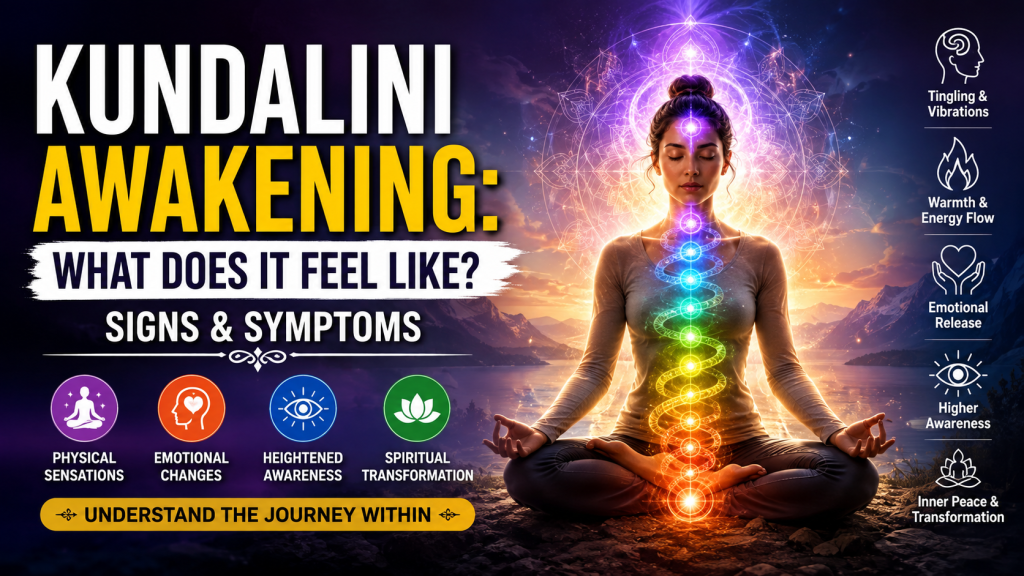
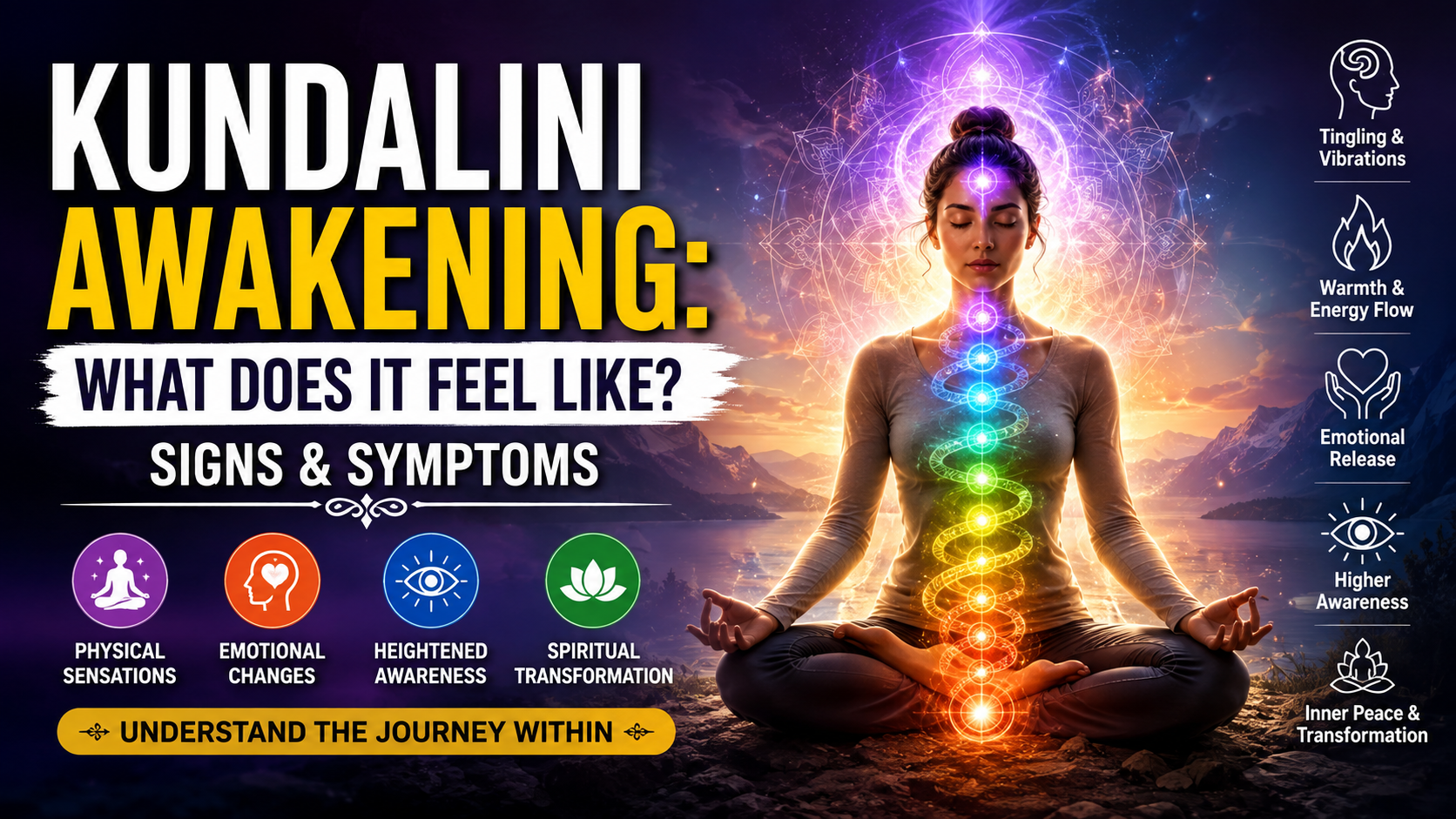
Kundalini Awakening: What Does It Feel Like? Signs, Experiences & What to Know
What Does Kundalini Awakening Feel Like?
Kundalini awakening is traditionally described as a profound spiritual experience associated with the activation or movement of Kundalini energy, which is often symbolically described as a dormant energy located at the base of the spine.
People who explore Kundalini practices may describe different physical, emotional, mental, and spiritual experiences. Some report feelings of warmth, tingling, deep relaxation, heightened awareness, emotional release, or a stronger sense of connection with themselves and their surroundings.
However, there is no single experience that everyone has during Kundalini awakening. Experiences can vary greatly depending on the individual, their spiritual practice, expectations, and overall physical and emotional state.
What Is Kundalini Awakening?
In traditional Indian yogic and tantric traditions, Kundalini is described as a subtle spiritual energy associated with the base of the spine. Kundalini awakening refers to the process in which this energy is believed to become active and move through the body’s subtle energy system.
The concept is closely associated with practices such as:
- Meditation
- Yoga
- Pranayama or breathwork
- Mantra practice
- Mindfulness
- Spiritual disciplines
Traditionally, Kundalini is associated with the chakras, which are understood within these traditions as energy centers.
It is important to understand that these are spiritual and traditional concepts rather than scientifically established anatomical structures.
Common Kundalini Awakening Symptoms
People who identify their experiences as Kundalini awakening may describe a wide range of sensations. Some commonly reported experiences include:
1. Tingling or Energy Sensations
One of the frequently described sensations is tingling or a feeling of energy moving through the body.
Some people describe sensations around the spine, head, hands, or feet. Others may experience waves of warmth or subtle vibrations.
2. Feeling of Warmth or Heat
Some practitioners report sudden warmth or heat during meditation or spiritual practices.
This sensation may be experienced around the spine, chest, forehead, or throughout the body.
3. Changes in Breathing
During deep meditation, breathing may naturally become slower and more relaxed.
Some people may also become highly aware of their breathing patterns. Controlled breathing practices can produce noticeable physical sensations, so breathwork should be practiced carefully and preferably with appropriate guidance.
4. Emotional Release
Kundalini awakening is sometimes associated with strong emotional experiences.
A person may experience:
- Unexpected happiness
- Tears during meditation
- Feelings of peace
- Emotional memories
- A sense of releasing old patterns
- Increased sensitivity
These experiences can feel intense, particularly when someone is going through a period of personal transformation.
5. Increased Self-Awareness
Another commonly reported experience is becoming more aware of thoughts, emotions, habits, and reactions.
You may begin observing your thoughts rather than automatically reacting to them. This can encourage introspection and personal growth.
6. Deep Peace and Relaxation
Some people describe moments of profound calm during meditation.
The mind may feel quieter, the body more relaxed, and everyday concerns may temporarily seem less important.
7. Heightened Awareness
Some practitioners report feeling more attentive to sounds, surroundings, emotions, or their own thoughts.
This may feel like a stronger awareness of the present moment.
8. Changes in Sleep Patterns
Changes in sleep can sometimes occur during periods of intense meditation, stress, emotional change, or spiritual practice.
Some people report sleeping less, while others feel a greater need for rest.
Sleep changes, especially if significant or persistent, should not automatically be interpreted as proof of Kundalini awakening.
What Does Kundalini Awakening Feel Like Emotionally?
The emotional experience can be very different from person to person.
Some individuals describe a greater sense of compassion, gratitude, love, peace, or connection. Others may experience emotional sensitivity or periods of uncertainty while reflecting on deeply held beliefs and experiences.
This is why spiritual awakening should not be viewed as a single dramatic event. For some people, it may feel gradual and subtle rather than sudden or overwhelming.
What Does Kundalini Energy Feel Like?
Descriptions of Kundalini energy are subjective because Kundalini is part of traditional spiritual frameworks rather than something that can currently be measured as a specific physical energy.
Practitioners may describe it as:
- A flowing sensation
- Vibrations
- Warmth
- Tingling
- Pulsing sensations
- A feeling moving upward along the spine
- A sense of inner expansion
- Deep stillness
These descriptions represent individual experiences and should not be treated as universal symptoms.
Kundalini Awakening and the Chakras
Traditional Kundalini teachings often connect awakening with the chakra system.
The commonly discussed seven chakras are:
- Root Chakra – Muladhara
- Sacral Chakra – Svadhisthana
- Solar Plexus Chakra – Manipura
- Heart Chakra – Anahata
- Throat Chakra – Vishuddha
- Third Eye Chakra – Ajna
- Crown Chakra – Sahasrara
According to traditional teachings, Kundalini energy may be described as moving upward through these energy centers toward the crown.
Different spiritual traditions interpret this process differently, so experiences should be understood within their specific cultural and spiritual context.
Signs of Kundalini Awakening
There is no scientifically established checklist that can confirm a Kundalini awakening. However, within traditional spiritual communities, people commonly associate awakening with experiences such as:
- Greater self-awareness
- Stronger interest in meditation and spirituality
- A feeling of inner transformation
- Increased emotional sensitivity
- Periods of deep peace
- A desire for personal growth
- Changes in perspective
- Increased awareness of thoughts and emotions
- A stronger sense of connection
These experiences can also happen for many other reasons, including meditation, stress, emotional development, changes in lifestyle, or ordinary psychological processes.
Is Kundalini Awakening Dangerous?
Kundalini awakening is discussed differently across spiritual traditions, and experiences can range from peaceful to challenging.
Intense meditation or breathwork can sometimes produce uncomfortable physical or psychological sensations. For this reason, it is wise to approach advanced spiritual practices gradually and avoid forcing intense experiences.
If someone experiences persistent physical symptoms, severe anxiety, confusion, hallucinations, inability to sleep, or significant changes in daily functioning, they should seek appropriate professional medical or mental-health support rather than assuming the symptoms are solely spiritual.
Spiritual practice and professional healthcare do not have to be viewed as opposites.
How to Approach Kundalini Practices Safely
If you are interested in Kundalini yoga or meditation, consider starting slowly.
Practice Consistently, Not Forcefully
Spiritual practice is generally more sustainable when approached with patience rather than trying to create dramatic experiences.
Focus on Grounding
Simple activities such as walking, spending time in nature, maintaining regular meals, and following a healthy daily routine can help you stay grounded.
Learn From an Experienced Teacher
If you are exploring advanced Kundalini practices, learning from a qualified and experienced teacher can help you understand traditional techniques and avoid unnecessary experimentation.
Listen to Your Body
Do not ignore persistent pain, severe distress, or significant changes in your physical or mental wellbeing.
Kundalini Awakening vs. Spiritual Awakening
Kundalini awakening and spiritual awakening are related concepts but are not necessarily identical.
Kundalini awakening traditionally refers specifically to the activation of Kundalini energy within yogic and tantric traditions.
Spiritual awakening is a broader term that can describe a profound change in a person’s understanding of themselves, life, consciousness, spirituality, or purpose.
A person may describe having a spiritual awakening without experiencing what they would consider Kundalini-related sensations.
Frequently Asked Questions
What is the first sign of Kundalini awakening?
There is no universally accepted first sign. Some practitioners describe increased self-awareness, meditation experiences, emotional changes, or physical sensations such as tingling or warmth.
How long does Kundalini awakening last?
There is no fixed duration. Some people describe awakening as a gradual process that develops over months or years, while others describe particular experiences that last for a short period.
Can Kundalini awakening happen suddenly?
Some spiritual traditions describe sudden awakening experiences, while others emphasize gradual development through long-term practice.
Can meditation trigger Kundalini awakening?
Meditation is traditionally associated with Kundalini practices, but meditation does not necessarily cause Kundalini awakening. Individual experiences can vary considerably.
What does Kundalini awakening feel like physically?
People may describe warmth, tingling, vibrations, changes in breathing, relaxation, or sensations along the spine. These experiences are subjective and do not by themselves confirm Kundalini awakening.
Final Thoughts
So, what does Kundalini awakening feel like?
For some people, it may feel like increased awareness, inner peace, emotional release, or unusual physical sensations such as warmth and tingling. For others, the experience may be subtle and gradual.
The most important point is that Kundalini awakening does not have one universal symptom or experience. It is a spiritual concept deeply rooted in traditional Indian practices, and individual interpretations can differ.
If you are exploring Kundalini meditation or yoga, approach the practice with patience, grounding, proper guidance, and awareness of your overall wellbeing.
Related Topics
- Kundalini meditation for beginners
- What are the 7 chakras?
- Signs of spiritual awakening
- Kundalini yoga and meditation
- How to balance the chakras
- Understanding Kundalini energy
- Spiritual awakening symptoms